


GUMA #4 – Health for Women in Uganda
Improved Menstrual Health, Water Safety, and Infection Protection
For women in Uganda, menstrual health, water insecurity, and infectious diseases are the biggest health challenges. Most women cannot afford menstrual hygiene products (sanitary pads). Their performance in school or at work is limited. The GUMA #4 project, funded by the Morpho Foundation, educates women, provides information, and contributes to better management of these issues.

Tackling Women’s Health Challenges in Uganda
Maternal and child mortality rates have increased in recent years. The number of underweight children has also grown. Additionally, the consumption of unsafe water, shared with animals, and drinking unboiled water have led to the widespread prevalence of waterborne diseases and infections such as schistosomiasis, cholera, and dysentery. GUMA #4 is a project that specifically addresses these health challenges.
Educational Modules in GUMA #4 Provide Knowledge for Women in Uganda

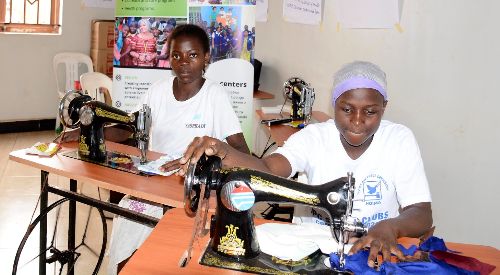
Sewing Reusable Pads
In compact training sessions, participating women receive important information about menstrual health and hygiene. Finally, the women sew their own reusable sanitary pads and receive materials for two additional pads to share their knowledge with friends.
The content also includes the female cycle and education on sexually transmitted diseases..

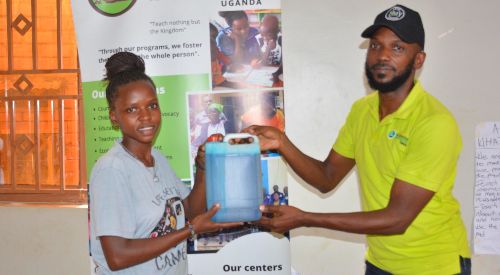
Learning Safe Water Use
In a second module, participating women are educated about water safety, such as the hygienic storage of water. The knowledge is a contribution to their health.
Additionally, the girls make their own liquid soap and learn everything about handling water, its procurement, storage, and purification.

In a pilot project, the girls learn how to earn their own income by reselling the pads they made. They also create a marketing plan.
Collaboration with Experienced Partners
The training sessions are organized by four local partner organizations from Stay. All are members of the Ugandan association LATEK Stay Alliance. The partners are often registered as NGOs but conduct entrepreneurially conceived projects, such as agricultural projects in schools and soap production. They are socially motivated and act entrepreneurially. Their common goal: to offer the poorest families in Africa opportunities to sustainably improve their own lives.
Project Facts about GUMA #4

For many women in Uganda, menstruation is a taboo topic. They often cannot talk about their complaints. As a result, girls miss school more frequently, and women cannot go to work.

The training sessions take place in four regions in Northern, Western, Eastern, and Central Uganda.

Up to 2892 women in Uganda are directly or indirectly reached through the training modules

Four local social entrepreneurs organize the training, all members of the Stay Alliance. Local trainers then conduct the training sessions.
Effective through Local Embedding
At the end of the training sessions, a joint event is held at the social enterprises. Important community actors such as health advisors or local radio journalists are present. The goal is to further anchor the importance of hygiene, health care, and nutrition in public awareness. Some of the trained women share their experiences.
Empowered women, empowered communities
A proud group of ladies showcasing their handmade reusable pads crafted from readily available materials. It reflects empowerment, creativity, and awareness about menstrual hygiene, especially in communities where access to sanitary products is limited. These sustainable solutions not only promote menstrual health but also foster improved livelihoods and support long-term community growth.


